Monthly Archives: August 2016

Mrs. Hill Goes to the Fair

Photo: Minnesota Historical Society

Throughout August, I am tracing Mary Hill’s summer of 1886 by highlighting her daily diary entries – follow me on Twitter to see what Mary, her family and all the visitors are up to at the Hill family’s summer estate and farm, North Oaks.

Since the Minnesota State Fair begins today, I thought it would be fun to see what Mary had to say about the Fair in her diaries. Mary was proud to be an early Saint Paul settler, moving with her family to the Minnesota Territory in 1850 – eight years before Minnesota became a state.

On September 10, 1885, Mary writes: “Went in to City to Fair with Mrs. Swan, Emma, Mamie and boys…saw Annie and family at Fair.” Mary came to the Fair from the family’s summer place at North Oaks, bringing her children (Mamie, Jimmie and Louis). The Hills made the trip with neighbor Mrs. Swan and her daughter Emma. Mary even saw her sister Annie. The Fair was bringing family and friends together long before the Fair was formerly called the “Great Minnesota Get-together”!

As a Saint Paul resident living not far from the fairgrounds, I can understand  what Mary is saying in the first sentence of her September 10, 1903, entry: “St. Paul seems filled with strangers. Fair is a great success first two days.  Philippine veterans have a reunion here and a parade today.” The tradition of honoring the military continues with special events for veterans and their families (Military Appreciation Day).

Like many grandparents today, taking the grandchildren to the Fair was a tradition. Mary writes on September 7, 1910: “This forenoon Maud, little Louis, Maudie and I went to the Fair.  In the afternoon we went to hear Papa’s address, a crowd greeted him.” Unlike most children, I suppose, little Louis and Maudie got to see their grandpa give a speech to a crowd at the Fair!

(James J. Hill gave several addresses at the Minnesota State Fair – I will cover that in my next post.)

Mary thought highly of the produce she saw in 1913, writing on September 3rd:  “About eleven a.m. Clara and I went to the Fair.  I thought the display of Minnesota apples remarkable, really fine, and vegetables equaled any I have seen anywhere.”

Photo: Minnesota Historical Society

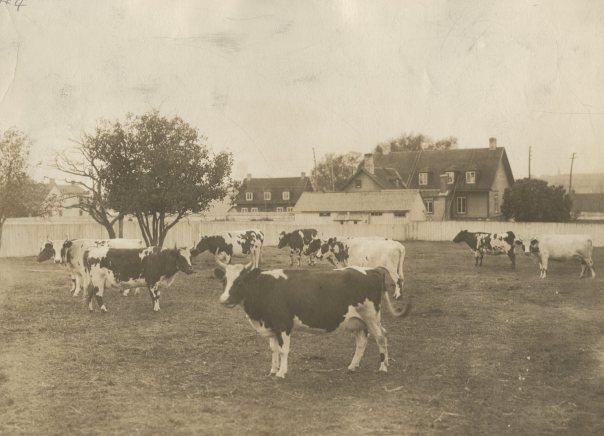
The Hill farm at North Oaks sent animals to the Fair.  Mary’s pride for these animals comes through in her entry of September 2, 1916: “We have sent the Suffolk Punch horses and several Ayrshire beasts to the Fair, the latter are beauties.” Later in the week, Mary reports that the “Ayeshires won many prizes”.

On September 2, 1918, Mary writes: “I have not felt well this week.  This is State Fair week.” She follows it up with this entry the next day: “Today was airships day at the Fair.  As I am indisposed slightly…I shall have to forego the Fair.”

The promise of airships must have been too much. On September 6th she writes: “Went to State Fair saw War Exhibit, Womans Bldg., Serbian Exhibit, and Dunwoody Workings in airships, etc.  Home and tired by 4 0’clock.”
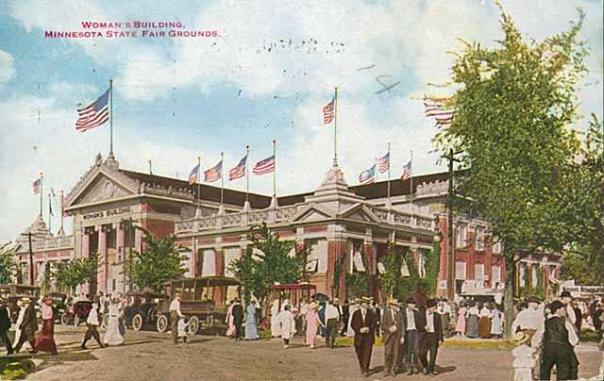
1910 Postcard of Women's Building: Minnesota Historical Society
1910 Postcard of Women’s Building: Minnesota Historical Society

There is no mention of Mary attending the Fair in 1919, but she made certain those who worked for her had the opportunity: “This is State Fair week, so each [farm worker/servant] one must have a chance to go.  Campbell and Lena today.”

The tradition endures today with some employers giving their staff a free afternoon or day off of work to attend the Fair. When I worked at the James J. Hill Reference Library, we were given a half-day to go to the Fair. I always thought of Mary’s diary entry. It is great for staff morale!

I will share more of Mary’s Fair observations throughout its twelve-day run on Twitter. Click here to see my tweets!

Want to read more on the history of the Fair? Click here to visit the Minnesota State Fair history page, with links to their digital archive.
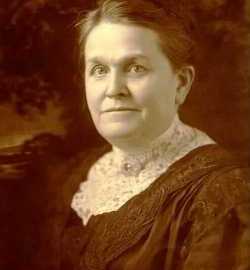
On This Day: August 23, 1886

Mary’s entry On This Day in 1886 cannot be confined to just one or two tweets. Such a busy day, Mary needed to write on three pages!

Another just as hot day up in the nineties. Went in to City to see Tourists and Mamie off. Took Mamie to Dr. Hand she not well at all. They get off at four. Papa and I went up far as Minneapolis with others. And to opening of Exposition. Oh it was so hot there we returned to St. Paul six and drove to North Oaks. So glad to have it to go to. Chelminski went to day to St. Paul.
[Entry continues on 6/13/1886 page] Aug. 23rd Mrs. Goodkind Mrs. Wirley Miss Goodkind drove out. Missed them.
[Entry continued on 6/14/1886 page] North Oaks Aug. 23rd. Mr. and Mrs. Kennedy Mr. and Mrs. Thorn Miss Thorn Miss Weed Mr. S. Weed Wm. Thorn Rev Dr. Schoffler Mrs. Schoffler Mamie Hill Started for Yellowstone Park  to day.
Photo: Minnesota Historical Society

It’s no secret that James J. Hill was a workaholic. According to biographer Albro Martin, Hill regularly put off vacation offers from friends and business associates, “But, from 1884, when he regretfully declined the Earl of Latham’s invitation to visit his famous breeding farms, to 1889, when he refused George Stephen’s offer of a trip through the Highlands of Scotland, it was always next year.”

Hill did not begrudge others a holiday. Martin describes the 1886 trip to Yellowstone:

Meanwhile, he cheerfully arranged junkets for others, sometimes promising that he would go along, then , at the last minute, deciding to stay at work. In the summer of 1886 he bundled New York politico Smith M. Weed, the Thornes, Mamie, and even Mr. and Mrs. Kennedy into a private car for a trip out west…(317)


Mary had entertained some combination of Thornes, Kennedys and Weeds at North Oaks for a week or more leading up to their departure for Yellowstone. The painter Chelminski left for Saint Paul. After enduring crushing crowds at the opening of the Industrial Exposition in record heat, Mary was happy to reach North Oaks, “So glad to have it to come to.”

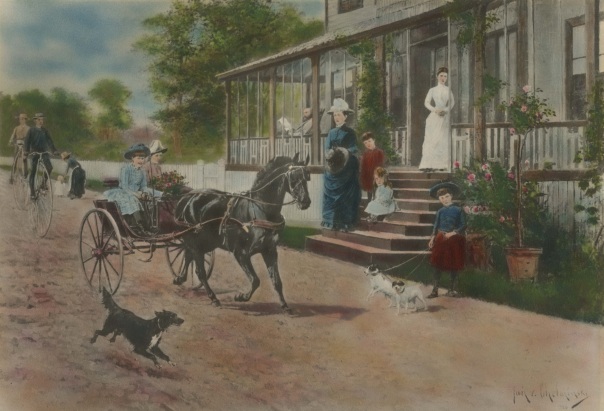
1886 Hill Family at the Farm (Painting by Chelminski, Private collection
1886 Hill Family at the Farm (Painting by Chelminski, Minnesota Historical Society)

Perhaps things at the farm might settle down for a spell? Only time will tell…Follow me on Twitter for further developments! I am sure Mary will soon get word on the progress of the Tourists…

Lake Minnetonka with the Hills and Friends

Mary Hill’s diary entry for Friday, August 20, 1886: “A cool morning cloudy very hot day. We went out to Hotel Lafayette and spent the night there with Thornes and Kennedys. Fearful storm in the night. Mamie Phelps Sarah and Mamie came out on train.”

Photo: Minnesota Historical Society

A change of scenery was in order. Visiting from New York, the Thornes and the Kennedys were good friends of the Hills, not just James J. Hill’s business associates. Mary Hill was very proud of the family farm at North Oaks, but it was her job to show her visitors from the East coast all the beauty Minnesota had to offer!

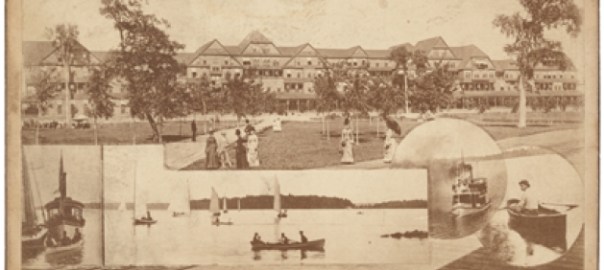
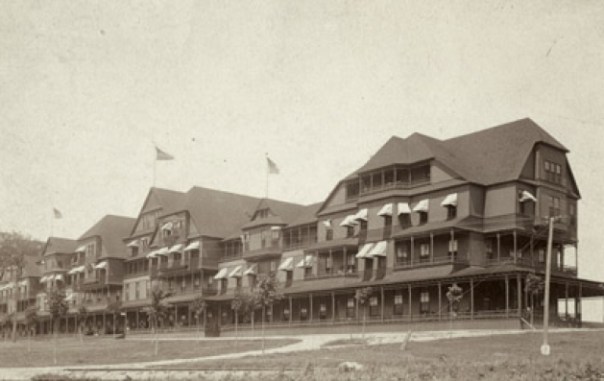
James J. Hill opened the Hotel Lafayette in 1882 on Lake Minnetonka’s Crystal Bay. The hotel was the largest on the lake: 800-feet long and five stories high with over 400 rooms. The parlors, dining and reception rooms were ornately decorated and wide wooden porches faced the lake.

Photo: Minnesota Historical Society

The luxury hotel became a popular destination for wealthy Americans, prominent politicians, and even European royalty. For more than a decade the hotel which had served as the site of many lavish banquets and idyllic summer getaways, burned down after the close of the season, in October 1897.

But on August 20, 1886, the Hotel Lafayette was the perfect backdrop for good friends and family to gather and enjoy a day at Lake Minnetonka. You will see in tomorrow’s diary entry that one night away was plenty for Mary. She was happy to return to her own North Oaks.

Photo: Minnesota Historical Society

Click here to go to my Twitter feed and see what Mary has to say every day in August as I post her daily diary entries. If you are on Twitter, please follow me and check these out: #OTD #MaryTHill.

Beautiful North Oaks

ln May of 1896 a reporter from the Saint Paul Globe traveled to North Oaks, the farm of James J. Hill, and wrote about the visit in an article for the paper. The author had nothing but good things to say about the farm. In fact, he gushed over the place, raving about everything from the cleanliness of the horse barn to the idyllic beauty of Pleasant Lake.

PHS-Bldg-Cows008

I should mention that Hill purchased the Saint Paul Globe in 1896. Although I know that the farm at North Oaks was a wonderful mix of  picturesque landscape and modern ingenuity, and James J. Hill approached every aspect of his life and business with the precision of a perfectionist and exquisite good taste, the account printed in the paper may have overstated some aspects of the farm. Or not – it is likely the farm was spectacular. (Perhaps I am the biased author!)

Clearly, this article was meant as a promotional piece, to highlight Hill’s methods and practices on the farm as ones which were best employed on farms all along the westward expanse of the railway. North Oaks stood as the ideal, the type of successful farm which would strengthen the railroad. Hill took full advantage of ownership of the newspaper to spread the word of his accomplishments.

The article is quite long, so I will share a few excerpts. The full article is available at the Minnesota Historical Society.

Among the many delightful drives about the environs of the city, few, if any, present greater attractions than the ten-mile jaunt out Rice street, which brings up at the entrance gate to North Oaks, JJ Hill’s dairy and stock farm. The road, though of constant ascent, is of easy grade and generally well made. The directness of the route, lying, as it does, along the north and south section lines, is robbed of any semblance of sameness or monotony by the constantly changing, but uniformly beautiful, scenery of the district…

PHS-NOFarm-Field009After this introduction the author provides the general layout of the North Oaks estate, description of the roads and the lakes, going into some detail about the water levels and supply.
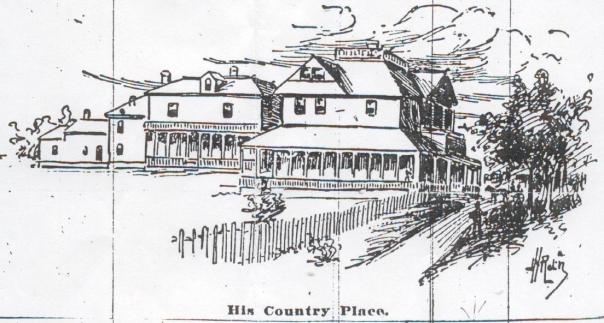
A goodly growth of fair timber chiefly oak, from which the farm takes its name, affords ample shade and shelter for the stock and fuel for the farm. The pastures, notwithstanding their large area, as well as the fields and yards about the farm, are all enclosed with pine panel fences, in which not a broken board or sagging post may be seen. They are amply provided with kim-hung gates and stout stiles, and there is therefore no need of open sections or other unsightly places of passage. And here, it may be said, that this neatness and orderly condition is a characteristic of everything about North Oaks, which must strike the most casual observer. There is a place for everything and everything is in it. On the occasion of my visit there last week, I saw not so much as a shingle nail astray…

One would expect no less from James J. Hill’s farm! The author goes on to describe the outbuildings, “neat in appearance, and of imposing size…”  including the office and the stables. Each building, “wears a coat of the proverbial farm red, with white trimmings”.

One of the best structures on the place is the barn for horses, which occupies the further end of the left row. It is 100 feet wide and 200 feet deep, with a height to correspond. It is arranged in two stories. The first, or ground floor, is taken up by the stalls, of which there are over a hundred, single and double, besides a score of stall rooms for brood mares and their foals. The stalls, walls and ceiling bear fresh coats of whitewash, everything is scrupulously clean, and the air is as fresh and pure and free from stable odors as it is on the hill tops. The second floor holds the hay loft,fodder rooms, oat bins, etc. In a wing at the other side is the feed room, where the diet for 165 horses is prepared daily. The feed is a mixture in due proportions of bran, ground oats and chopped hay, a healthful and economical method of preparing and administering it. Necessary machinery for its preparation is here, and is operated by a long shaft extending under ground from the engine house, twenty rods distant. The stock in the barn is very fine, and includes several beautiful Cleveland bay brood mares.

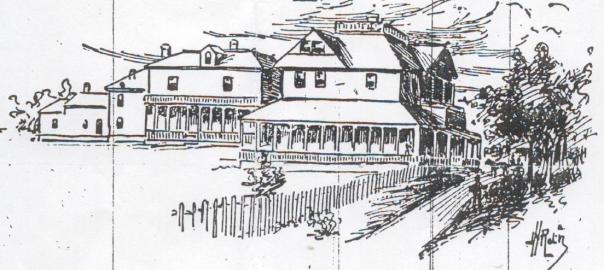
Next is the “commodious, but unpretentious” residence. The author points out that the Hill family spent the majority of their summer at North Oaks, where not even the railroad “dare intrude on the tranquility of this peaceful place”. The nearest railroad is two miles away.

A vineyard of California grapes (in a hothouse during the winter), 2000 “fleecy sheep”, and even a herd of buffalo populated the acreage at North Oaks. The author, “disliked to leave so fair a scene and such pleasant surroundings,”  but he had to return to St Paul in the afternoon.

With the memory of this visit fresh upon me, I have endeavored to sketch here a hurried picture of North Oaks, with its beauties and points of excellence; but as I glance over what has been written, I am brought to realize that the portrait falls far short of the reality, and that it may well be said in closing that “the half hath not been told.” –C- J- W.

1883 HOME

If North Oaks was half as delightful as this reporter described, I can understand why the Hills loved their summers on the farm so much.  I am sharing Mary Hill’s diary entries from 130 years ago all month on Twitterfollow me  and see what she did #OTD (On This Day) in 1886.

All Images: Hill Family Collection, Minnesota Historical Society

Summers on the Farm: Hill Family at North Oaks

1886 Hill Family at the Farm (Painting by Chelminski, Private collection
1886 Hill Family at the Farm (Painting by Chelminski, Private

North Oaks was the summer home of the James J. Hill family of Saint Paul, Minnesota. The farm was located ten miles north of Saint Paul, in a peaceful rural area, full of trees, lakes and wildlife. Hill purchased 3,000 acres of land from Charles Gilfillan in the fall of 1883. During the early months of his ownership Hill employed over 300 workers to clear sections of the land and ready the ground for planting, construct buildings for stock and farm operations and prepare the existing Gilfillan residence for his family.

In the spring of 1884, Mary Hill began making preparations to move her family of eight children to North Oaks for what would be the first of many summers they would spend there. Mary, pregnant with her last child and feeling ill much of the time, managed to order furnishing and supervise the renovations of the house.

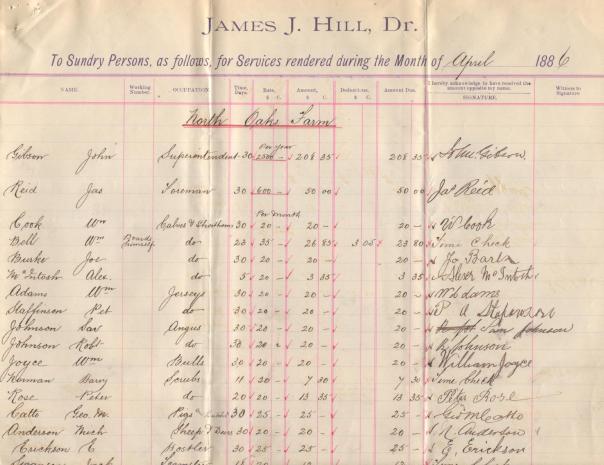
payroll
Minnesota Historical Society

How do I know how Mary felt and what she did? Don’t tell anyone, but I read Mary’s diary. (You can, too. Mary Hill’s diaries are at the Minnesota Historical Society.) The best way to find out what was happening during those first years at the farm is to look at what Mary had to say. She writes in 1884, “Went to farm, a very hot forenoon but a delightful evening. Had a hard day there looking after the movements of 9 men besides the unpacking of crockery.”

Mary was particular about the renovations of the North Oaks home, down to which stoves she wanted, “We shall want seven in all, six links of pipe and two elbows for each.” Since she preserved fruit and made juice and wine, we can assume Mary also made the decisions as to the planting of apples, cherries, plums, gooseberries, currants, raspberries, blackberries and grapes that took place in those first summers.

The Hill family moved out to North Oaks on July 14, 1884, and the next day Mary writes, “A beautiful day. About twenty-five farmers from Dakota came to see stock…also County Commissioners. Papa stayed out all day.” Thus begins life at North Oaks – loving it, sharing it and showing it off. North Oaks becomes a destination for friends, family, and others interested in the progressive agriculture systems Hill employed on the farm.

Some visitors stayed for a few hours, some for a few days, but rarely was there a day without someone (or something) new on the farm. Mary’s diaries can read like a “Who’s Who” of 19th and 20th-century business and society, but all arrivals get a mention, “New cattle arrived… Our first tramp called today…” On October 13, 1885, “Baby Smith [Alma, daughter of blacksmith, Nels] born at 4p.m., first birth at North Oaks. Went over to see new baby, all well.”

PHS-Bldg-Cows008The Hill children enjoyed their days at North Oaks. James Norman and Louis began hunting with their father, “Papa came home early and took boys for their first shoot. Ducks were plentiful consequently all came home happy.” The teenage daughters, Mamie and Clara, went for walks and horseback riding. The little ones enjoyed the outdoors and the animals, “The children had a delightful day, enjoyed seeing the ducks get freedom. A happy day for all…little pony and cart came out to the joy of the children.”
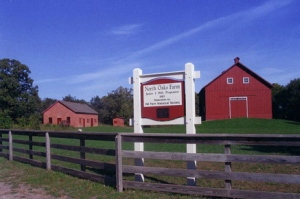
Mary wrote extensively of the beauty of North Oaks, and of her joy in being able to experience it, “Picked some golden rod and a beautiful purple blossom…[Papa and I] went for such a delightful drive around the lake… beautiful Indian Summer weather, such glorious sunsets all the week.”

Mary’s love for North Oaks shines through in her diary accounts of the summers spent on the farm. Summers far from the dust and crowds of her home in Lowertown Saint Paul, special summers for Mary watching her children grow up and the entire family making lifetime memories.


HillFarmA few original buildings remain on the site of Hill’s farm at North Oaks: a barn/granary, the blacksmith shop and the dairy. Please visit the Hill Farm Historical Society for more about the history of North Oaks and how they are working to preserve “Hill’s legacy of innovation”. Guided tours are available by appointment or there is a self-guided tour on the website.


Follow me on Twitter as I peek at Mary’s diary throughout the dog days of August 1886. A typical Minnesotan, Mary always keeps us posted on the heat and the rain (or lack of it). Mamie, Mary’s eldest child, was an eighteen-year-old in the summer of 1886. Her youngest, Walter was just over a year. It would be five years before the Hill family moved into the house at 240 Summit Avenue.

Let’s see what Mary is up to…join me on Twitter and check back with the blog for more on Mary, James, and the rest of the Hill circle!

Cherokee Park: James J. Hill’s gift to Saint Paul

CherokeeParkRealized as a potential recreational and natural green space in the early 1900s, Cherokee Regional Park has since developed into one of Saint Paul’s most visited parks, bringing in over 300,000 visitors a year.

(City of Saint Paul website)


James J. Hill is known as the Empire Builder for his vast network of railway, extending from Saint Paul, Minnesota to the Pacific Northwest, which created prosperous towns and cities along the way, changing lives and offering opportunities. Emphasis on Hill’s personal financial success overshadows what he gave back to build communities – gifts to institutions, groups, and individuals, along the railway, throughout the country, and especially at home in Saint Paul.

In October 1905, James J. Hill gave $13,000 ($335,364 in 2016 dollars) to the City of Saint Paul. Hill donated the money for the express purpose of “…acquiring by purchase or condemnation, for park and parkway purposes, a certain strip of land lying…west of the High Bridge, east of Chippewa Avenue, and between Cherokee Avenue and the foot of the bluff on the south side of the Mississippi River.”

A donation letter, dated October 23, 1905, outlines the specifications of the gift. Hill kept precise records of all financial transactions – taking as much care to document a ten-cent travel reimbursement as he did for a $13,000 donation. It is fascinating to see the “rough draft” of this letter, with handwritten edits and notes in Hill’s own hand, as well as that of Hill’s private secretary, John Toomey. If the City of Saint Paul Board of Park Commissioners was unable to secure the site and establish a park within two years, the money would need to be returned to Hill.

This would not be necessary. Fresh air and open space welcomed the citizens of Saint Paul to Cherokee Park. The original park plan included camping areas, a bathhouse, picnic shelter and plenty of trees. Later improvements to the park included basketball and tennis courts, a playground, two large picnic shelters and walking trails.

Storm hits High Bridge, 1904. (www.wikipedia.com)

The spectacular views from the Mississippi River bluff are a focal point of Cherokee Park. These views existed long before James J. Hill sent his check to the Board of Park Commissioners, and they are the same views visitors enjoy today. The City of Saint Paul was important to Hill. He was committed to giving back to the town which had given him so much. Cherokee Park stands today as tangible evidence of Hill’s dedication to the city and her residents.

The donation acceptance letter from the Board of Park Commissioners sums up the importance of the both the gift and the giver:

RESOLVED, That it is the confident expectation of the Board that, with the help of this generous donation, the land in question will be soon acquired for a parkway; and that thus, this portion of the west side bluff, which is one of the most conspicuous of the natural beauties of St. Paul, will be preserved to its people for all time to come; and add one more to the many benefactions which owe to the bountiful good will of Mr. Hill towards the City, which has been so long his home, and the primary center of his activities in building up the northwest; and which have so greatly benefited this City as the terminus of his great Continental Railway System.

(Hill Family Collection, Minnesota Historical Society)


  • Click here for current information on amenities and facilities of Cherokee Park.
  • To see a lovely photograph of present-day Cherokee Park, as well as photos of other Saint Paul parks, click here.
  • For the fascinating history of the Smith Avenue High Bridge, which spans the Mississippi River near Cherokee Park, click here.